Skip to content

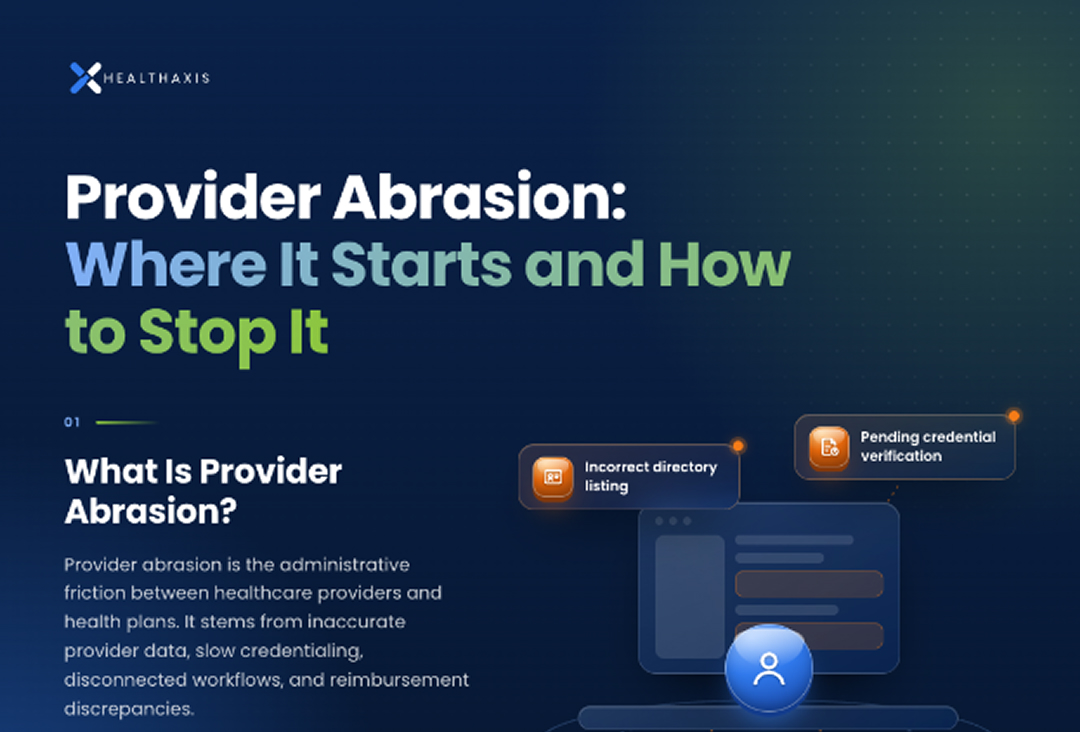
Provider abrasion is the administrative friction between healthcare providers and health plans. It comes from inaccurate provider data, slow credentialing, disconnected workflows and reimbursement discrepancies, and most of it starts upstream, inside the health plan's own operations.
This infographic shows the four most common causes of provider abrasion in healthcare, how one bad record turns into extra cost and audit risk, and how connected provider data and embedded AI help health plans reduce friction at the source. Download it below.
Frequently Asked Questions
What is provider abrasion?
Provider abrasion is the administrative friction between healthcare providers and health plans. It stems from inaccurate provider data, slow credentialing, disconnected workflows and reimbursement discrepancies, and it usually starts upstream within health plan operations.
What causes provider abrasion?
Four operational gaps cause most provider abrasion: inaccurate provider directories, slow credentialing, disconnected referral management and reimbursement discrepancies. Each starts with outdated or disconnected information inside the health plan and shows up for providers as repeated corrections, delays and disputes.
How often must health plans verify provider directory information?
Under the Consolidated Appropriations Act, 2021, group health plans and health insurance issuers must verify provider directory information at least every 90 days. They must also update the directory within two business days of receiving new information from a provider or facility.
How can health plans reduce provider abrasion?
Health plans reduce provider abrasion by fixing causes instead of handling complaints. That means continuously updated provider records, automated primary-source verification, connected referral workflows, and shared contract and fee-schedule records, so problems are identified and resolved earlier.
How does AI help reduce provider abrasion?
AI can monitor provider data for outdated or inconsistent records, automate routine credential and license checks, flag contract discrepancies and potential network gaps, and route exceptions to specialists with context. It reduces avoidable administrative interactions while people keep control of decisions that need judgment.
What does HealthOS Provider include?
HealthOS Provider brings credentialing and enrollment, directory and network, referral management, reimbursement and contracting, and quality and performance together on one shared data core. Aipass™, the embedded intelligence layer, supports continuous monitoring, automated verification and early detection of issues before they reach providers.